
Tattoo Pain Chart and What To Expect
Tattoos generally involve some level of discomfort. The location and your personal tolerance will play a role on the level of discomfort. Areas with less fat or meat or with many nerve endings, or thin skin tend to hurt more.
Here's the breakdown. Tattooing consists of repeated piercings on your skin's top layer with a or multiples needles covered with pigment. So, yes, tattoos are generally painful or uncomfortable. However, everyone has a different level of tolerance and people may experience different pain levels that others may not.
The Most Painful
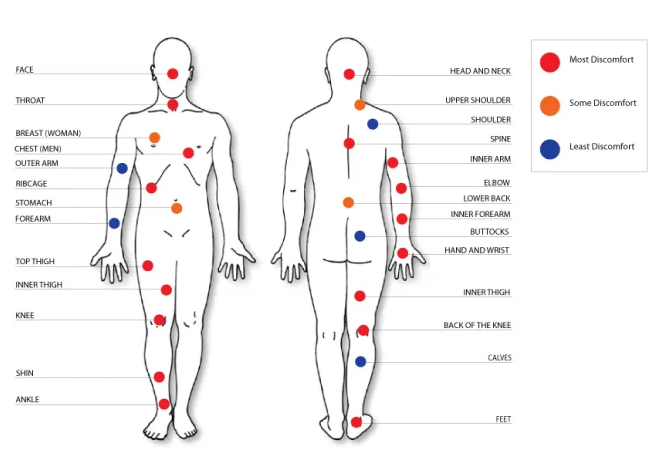
The most painful places to get tattooed are those with the least fat, most nerve endings, and thinnest skin. Bony areas usually hurt a lot.
- ankles, feet, toes
- shins, kneecaps or behind the knees
- stomach
- groin area
- inner thighs
- inner or outer elbows
- wrists, palms and fingers
- rib cage
- armpits and inner biceps
- areola and nipples
- skull
- spine
- neck and throat
The Least Painful
The least painful places to get tattooed are those with the most fat, fewest nerve endings, and thickest skin.
- Calves
- forearms
- back
- chest
- outer thighs
- upper arms
- shoulders
Men vs Women
Pretty much the same for everyone. Skin thickness, bone proximity and nerve density drive pain levels regardless of gender. However, there are some differences worth acknowledging.
For men: Men typically report the shin, elbow and knee areas as particularly intense, where lean muscle mass means less tissue cushioning over the bone. The inner arm and armpit are also frequently cited as unexpectedly painful male collectors regardless or size and tolerance.
For Women: Women typically report higher pain sensitivity on the ribcage, sternum, and lower back. Hormonal factors and typically lower body fat in these areas contribute to more acute sensitivity. Many women also report that timing relative to their menstrual cycle significantly affects pain experience. Normally the wee prior to menstruation tends to be heightened in sensitivity as opposed to after.
Does the Type of Style Affect the Pain?
Unfortunately, yes. Depending of what you are getting done, whether it may be fine line, black and grey, colour, realism or a simple outline, the technique and it's requirements have a real impact on how the session feels, regardless of the placement.
Realism, black work, black and grey and colour tattoos involve more needle passes, heavier in saturation and more skin trauma. These styles are generally more painful as they are more time consuming.
Fine line tattooing consists of a single needle or a small group of needles with very light ink saturation. The needle passes are lighter and less traumatic to the skin. Theses tattoos however, may require frequent touch up then other tattoo styles.
Managing the Pain
We always provide a pre tattoo day care form along your booking session emailed directly to you. Professional artists will read their clients expression properly and adjust their pace accordingly.
Here are some recaps:
Alcohol: Alcohol is a blood thinner and dehydrates the skin. This makes it more painful (then it should be) and tattooing more difficult. We always recommend avoiding alcohol for at least 24 hours before your appointment.
Sleep: Being well rested and having a good night sleep will be one of the best decision for your body and mind. Fatigue will increase the pain sensitivity.
Water: Being hydrated prior to your session will make the session go by smoothly. Well-hydrated skin is easier to tattoo and of course heals better. Bring an extra bottle of water for during the session.
Eat: Having a low blood sugar level makes things a bit challenging. We recommend our clients to eat at 1.5 hours prior to the session. Snack are always recommended for longer sessions.
Communication: If you at any point feel discomfort, tell your artist. If you at any point need a break, tell your artist. Working with a professional and experienced artist who understand these dynamics will make for a much better experience and difference. An experienced artist will read their clients expression and adjust their flow accordingly.
Bottom line
So now that you have an idea. Please listen to your artist about your pre-session instructions. It's your skin and you should that serioiuly